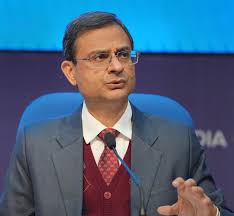
Reserve Bank of India Governor Sanjay Malhotra has spoken about FCNR(B) deposits coming more in the 5-year tenure, the tools available with the central bank to absorb excess banking-system liquidity and reassessing the growth-inflation dynamics in the next monetary policy amid the rise in crude oil price.
Tackling surplus liquidity due to surge in FCNR(B) inflows
On draining out surplus liquidity created by the higher-than-expected surge in FCNR(B) deposit inflows, Malhotra has indicated that the central bank is prepared to deploy a combination of steps if required.
He has not ruled out measures such as the cash reserve ratio (CRR), the market stabilisation scheme (MSS) and cash management bills to flush out liquidity.
“Nothing is off the table,” the governor said in an interview with business news channel CNBC-TV18.
The immediate objective, according to him, will be to ensure that the weighted average call rate remains aligned with the repo rate. Excess liquidity was currently keeping the rate lower.
“Some of the liquidity will be withdrawn on its own over a period of time,” Malhotra said, citing currency circulation, foreign-exchange intervention, rising bank reserve requirements and strong credit growth as factors that would absorb liquidity.
The central bank can also use open market operations (OMOs) and foreign-exchange swaps to drain surplus funds, he pointed out.
Malhotra said the RBI had removed CRR requirements for FCNR(B) deposits and would therefore be conscious of that while considering its options.
FCNR inflows to add revenue at net level
Malhotra said nearly half of the $127.23 billion foreign currency non-resident (Bank), or FCNR(B), deposits mobilised by the banks under the RBI’s special swap window were for a five-year tenure and would go to stabilise the forex market.
“Almost 50%, 48.50% or so is five-year, and about 42% is three-year and up to four years, less than four years, and the remaining about 9% or so in the four to five-year window,” Malhotra said in an interview with CNBC TV-18.
“It has given us the liquidity at the same time, and it has improved sentiments,” he added.
Dismissing concerns that the scheme would prove costly for the RBI, Malhotra said the foreign-exchange inflows could instead generate additional income when the central bank deploys the dollars in overseas government securities to earn interest.
The RBI discussed the scheme with major banks and other stakeholders before launching it, he added.
While banks have mobilised $127.23 billion in FCNR(B) deposits until the swap window closed on 31 August, $5.3 billion has come in form of overseas foreign currency borrowings (OFCBs) and $3.9 billion through external commercial borrowings (ECBs). The swap windows for OFCBs and ECBs will remain open until 31 December 2026.
“Some people are comparing it with the benchmark three-year forward premium. I don't think that's the right way to do it. That's not the right price. Also, because the market there is very thin, very few trades over the course of a year, and for the kind of deposits that we were looking for, I don't think that could have been any premium that we could have got. I think it was fairly priced, and it was important from the perspective of the Indian economy and the external sector resilience that I mentioned”, Malhotra said.
Among the lenders who have announced the FCNR(B) mobilisation are: ICICI Bank with $17.9 billion; Bank of Baroda with nearly $8 billion; IDFC First Bank with $3.5 billion; RBL Bank with $3.4 billion; Bank of India with around $2.4 billion; Indian Bank with $2.3 billion and Central Bank with over $900 million.
Reassessing growth-inflation dynamics at next MPC
Malhotra said the monetary policy committee (MPC) will reassess the growth-inflation dynamics when it meets next month amid rising crude oil prices due to the ongoing West Asia conflict. pose an upside risk to inflation.
On inflation, Malhotra said the rising crude oil prices will have an impact but it will depend on how much is passed through.
"Crude has gone up. July was for the Indian basket an average of $82 billion. In August, it has gone up to $90 billion. That will certainly have some impact on inflation, but it will depend again on the pass-through," Malhotra said in the interview.
“The MPC will make a reassessment of the growth-inflation dynamics when it meets in a month or so,” he said, declining to give his own assessment.
The next MPC meeting is scheduled for October 5-7.
India’s external sector outlook positive
Malhotra said India's medium- to long-term external-sector outlook remained positive.
Pointing to India's recent trade agreements, he said lower dependence on energy imports would help the current account. Gross foreign direct investment also remained robust, while net FDI was positive at about $7-8 billion in the first three months of the year, he said.